The Practice of the Commons
Keynote
Three classroom practices that keep students the authors of their own thinking: hold the question, protect the struggle, curate out loud. Drawn from a live course where students study their own reasoning as they work with AI, and grounded in the charge Pope Leo XIV gives educators in Magnifica Humanitas.
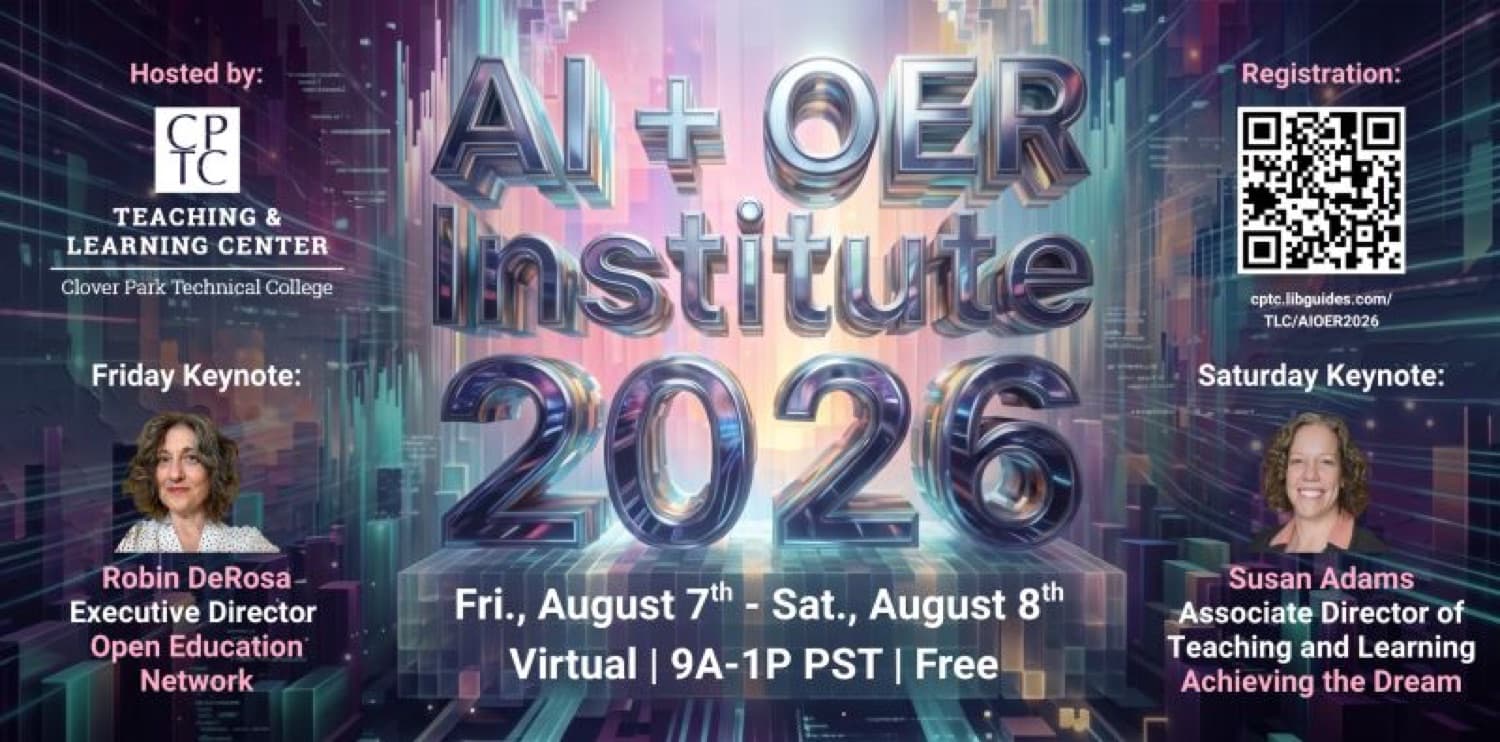
Robin DeRosa opened the institute by asking whether common ground can still exist between openness and AI. This keynote is an answer from inside a classroom. The commons here is a practice before it is a repository: transparency, learner agency, and resistance to concentrated control over learning, built as design choices a faculty member can make in a course shell this week.
The talk moves through three practices. Hold the question, so independent thinking is produced and logged before AI access unlocks. Protect the struggle, by naming the effort that builds competence and keeping AI out of it. Curate out loud, so disclosure and selection become named and assessed work. Each one is illustrated with what happened when a cohort of working adult students did it: a student who could no longer tell her own sentence from the machine’s, a student who refused her assistant the data access it kept asking for, and a constraint one student wrote into her assistant that became a cohort-wide inquiry into trust.
The premise underneath is that the quiet loss of authorship is the risk worth designing against. The machine does not seize control. People stop noticing they handed it over, and lose the muscle that would let them want it back.
A note on the encyclical
At the start of this keynote I made a passing remark speculating about the motives behind Pope Leo XIV’s encyclical on artificial intelligence. That was not mine to speculate about, and it is not what I think. I am grateful to the colleague who told me so. Being reminded of the full integrity of what you are trying to say is a gift.
A substantial part of Magnifica Humanitas is about education, and it does not let educators off the hook. Pope Leo XIV writes that our systems are struggling to keep pace, and that the role of the teacher, our assessment methods, and the way we organize schools all have to be rethought. He calls for the ongoing formation of teachers across their entire professional lives, so that we can help students meet these tools with responsibility, criticism, and creativity. He warns about an education that loses its love for truth, where a constant flow of information stands in for research, reflection, and discernment. And he writes that schools are not called to match the pace of the digital world. They are called to offer what the digital world cannot, which is shared time for learning and trustworthy relationships.
That charge sits alongside the line most people are quoting, that educating people about AI includes teaching them to decide when and for what purpose it ought not to be used. It sits alongside his insistence that learning needs rhythms with silence, in-depth study, reading, and careful analysis, because inner freedom depends on them. “Every technology shapes those who use it,” he writes, and he means us as much as our students.
This keynote is one answer to that charge. Students produce their own thinking before AI access opens, name the effort that builds their competence and protect it, and document the judgment behind their choices. My course spends its first two weeks going inward, guiding students to watch themselves with the tool before they build anything. I designed that sequence for cognitive reasons. The encyclical named the deeper reason better than I had.